Fresh from Shipaton

Lupo - Film Emulsion Camera
A frame you can't check is the one you think about before you take it.
Loading activity…
2026Shipaton
CategoryPhoto & Video
DeveloperJanusz Polowczyk
iPhone · iPad




About this app
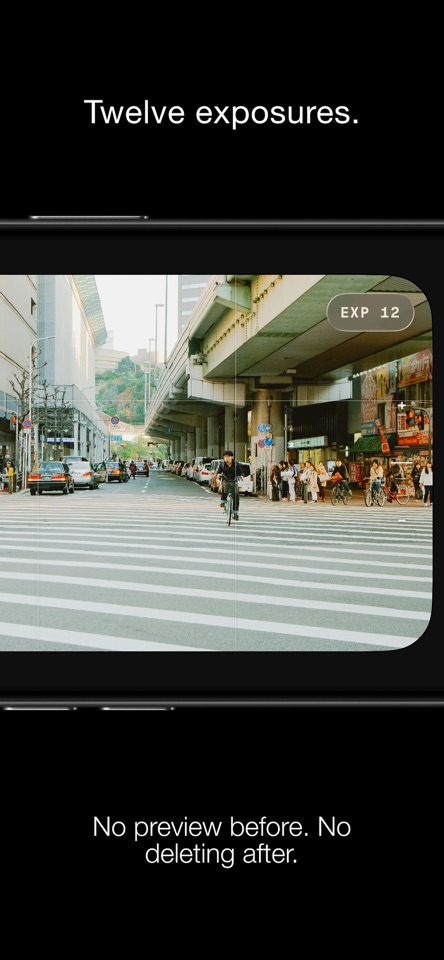
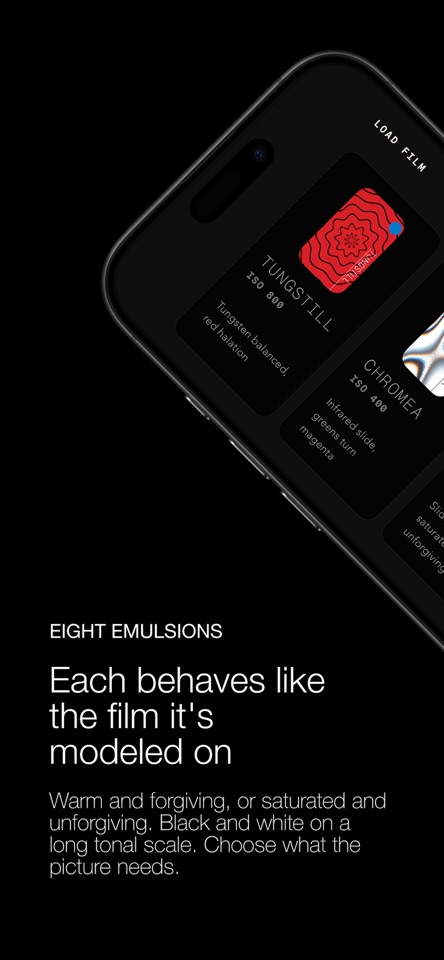
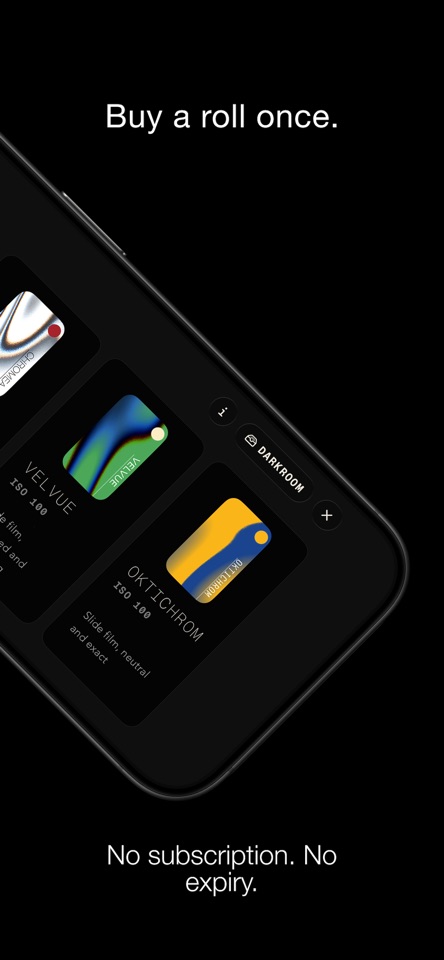
"A frame you can't check is the one you think about before you take it." Lupo does not apply a filter. Every frame is exposed onto a modelled emulsion, developed, and printed, and you find out what you got when the roll comes back. FILM IS BOUGHT BY THE ROLL No subscription. No renewal, no trial that turns into a charge, and nothing that expires while you aren't looking. Film works the way it always did: $1.99 buys one roll of twelve frames, and loading it into the camera uses it up. Halcyon is free, never runs out, and is always on the shelf. Developing is always free. WHAT A FILTER CANNOT DO A filter is a fixed transformation applied to a finished photograph. Same input, same output, every time, whatever light you were standing in and whatever you did with the camera. Film is a material that reacts, unevenly and with side effects nobody asked for. Grain is not noise. A patch of emulsion is an enormous number of silver grains, each of which either developed or did not, so the variation peaks in the midtones and vanishes in paper white and in maximum black. Added noise is flat everywhere, including where real film is perfectly smooth. Every layer has its own characteristic curve, with its own toe and its own shoulder. That is why one stock compresses a blown highlight where another clips it. Not two presets. Two curves. Bright light passes through the emulsion, reflects off what is behind it and comes back, tinted by the base. That happens before the film has responded, while the numbers still mean light. EIGHT EMULSIONS Porto. Warm, forgiving, made for skin. Halcyon. Golden and punchy, everyday sunshine. Free, always. Panford. Black and white on a long tonal scale. Pantri-X. Black and white, fast and gritty. Tungstill. Tungsten balanced, red halation around every bright light. Chromea. Infrared slide film. Greens turn magenta. Velvue. Slide film, saturated and unforgiving. Oktichrom. Slide film, neutral and exact. The three slide stocks are the film itself. No negative, no print, and no paper to be forgiving on your behalf. THE CAMERA Twelve exposures to a roll. No preview of the result before the shutter, and no deleting the bad one after it. An aperture ring from f/2.8 to f/16 that is real exposure rather than a slider. Two stops open of the metering point is two stops of overexposure, and the film handles it the way that film handles it. Tap anywhere to meter, and the needle tells you where you are. Set a shutter speed or leave it automatic. A bright-line finder rather than a live preview, because a viewfinder that showed you the photograph would remove the only thing worth keeping. A self-timer, double exposure on a single frame, and rewind. The interface never rotates to correct you. Turn the body and the picture turns with it, exactly as it would on film. THE LAB Shoot the roll, hand it in, wait two hours. Your first roll comes back in five minutes; nobody should wait two hours to find out whether they like the app. A Home Screen widget shows what is in development and how long is left. At drop-off you can ask for push or pull development, which changes contrast, grain and fog exactly as extended development does in a tank, and buys back part of a stop of speed. Never all of it. Load a roll that expired eight years ago and it is slower, foggier and uneven in patches. All of it composes. A roll of eight-year-expired tungsten film, pushed two stops, shot at f/8, goes through every one of those stages in order, and the print is what that would actually look like. WHEN IT COMES BACK Twelve frames arrive together on a contact sheet. Each developed roll goes into its own album, so the twelve stay together instead of scattering through your library. The photograph you get back is a consequence of what you decided, not a preset you picked off a list. Your choices are in the picture. That is the entire difference. You find out what you got when it comes back, and not before.


